
The design
The complete pattern is first marked on a base according to canonical proportions and iconography.
Sacred art and impermanence
A precise two-dimensional representation of an enlightened realm, created as an aid to contemplation.
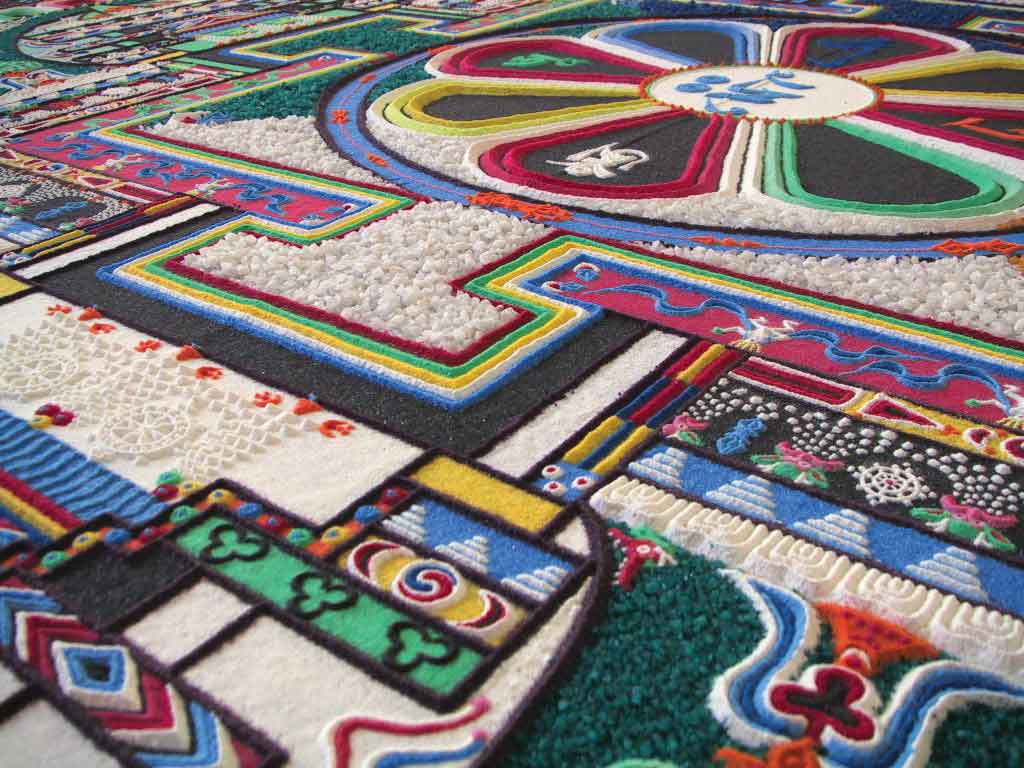
A sand mandala represents the residence and qualities of an enlightened being. Its proportions, symbols and colours follow traditional texts, with every detail recalling aspects of Buddhist teaching and the path to enlightenment.
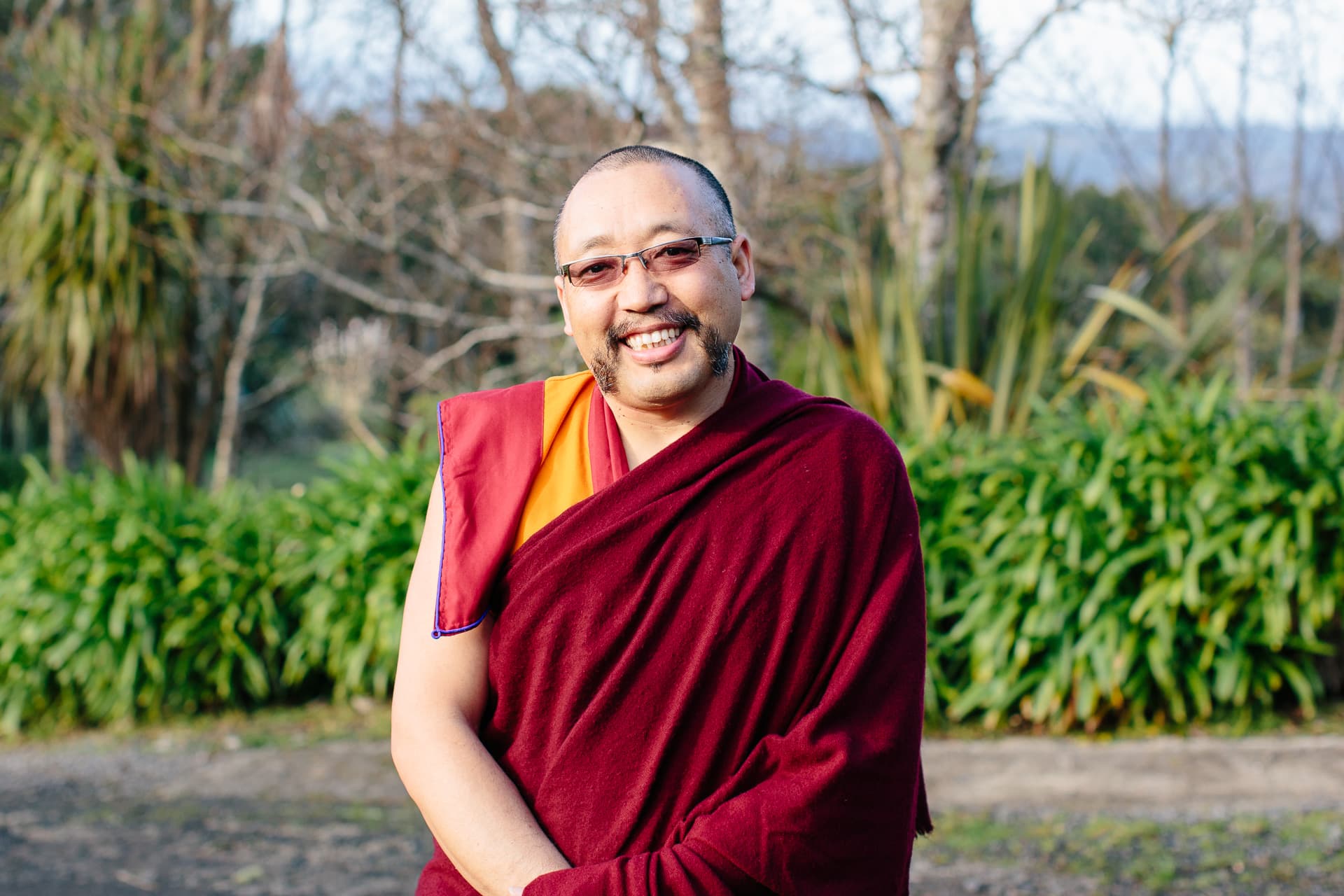
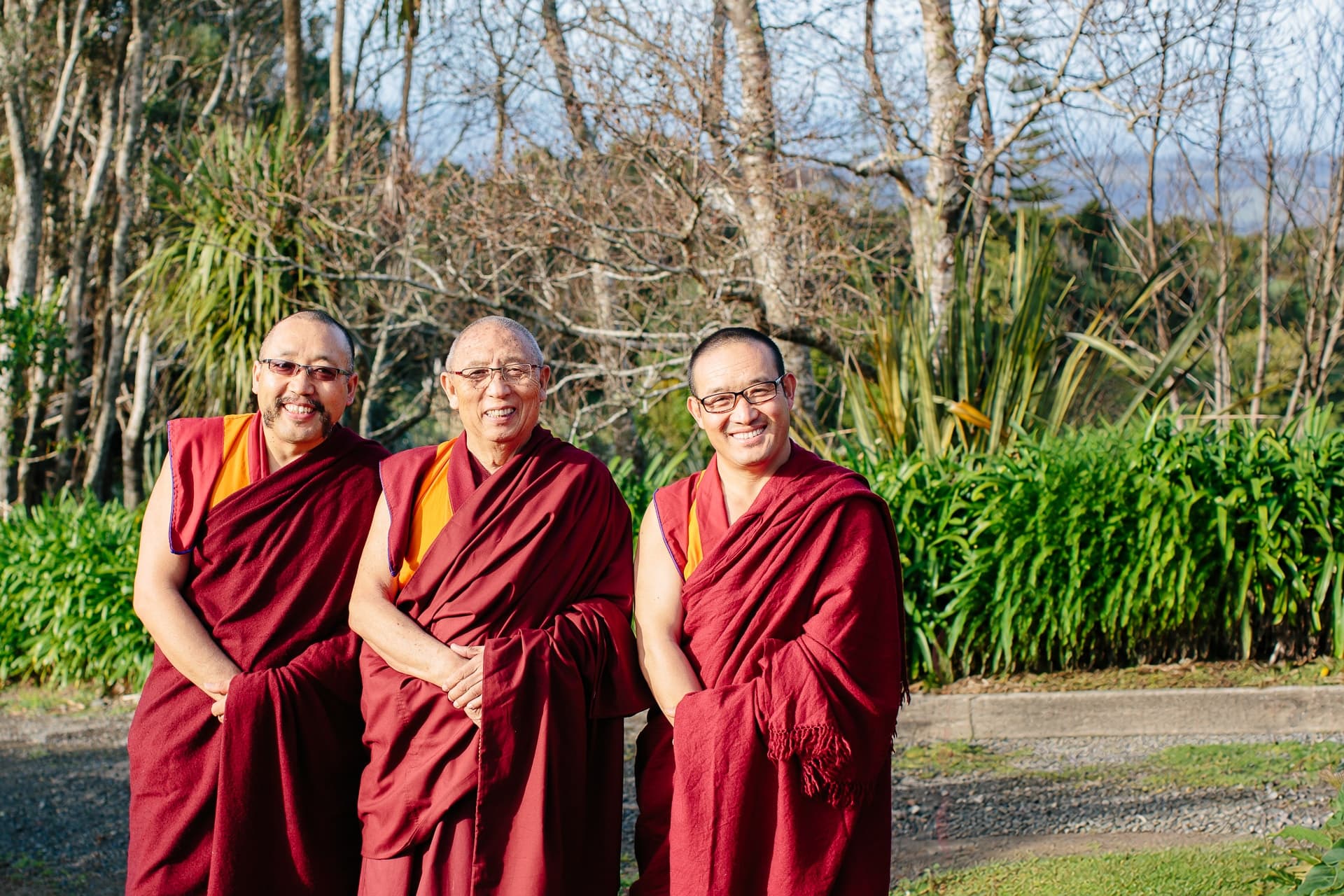
The centre's monks have created mandalas as a contemplative practice and a public expression of compassion. The process invites careful attention while offering viewers an encounter with Tibetan Buddhist art and symbolism.
The complete pattern is first marked on a base according to canonical proportions and iconography.
Fine, medium and coarse grains are carefully prepared and coloured for different parts of the design.
A ridged metal funnel called a chakpu releases a controlled stream of sand; a shinga is used to refine edges.
The artists work with sustained attention while cultivating love, compassion and altruistic intention.
After completion, the mandala is deliberately dissolved. This is a direct teaching on impermanence and non-attachment: even something beautiful, intricate and painstakingly made arises through causes and conditions and does not remain.
Traditionally, the gathered sand is carried to flowing water and offered with prayers for peace, prosperity and good health for the surrounding place and all living beings.
Next step
Learn about thangka painting, meet the resident Sangha or see current cultural events.
Stories, photographs and teachings from the life of Jam Tse Dhargyey Ling.